

Published: July 21, 2026
Key Takeaways
- If you have a Medicare Part D plan, you will receive your Annual Notice of Change (ANOC) by mail by the end of September.
- Your ANOC includes changes to your costs, formulary, and pharmacy network coverage for next year.
- Reading your ANOC closely can help you decide if you need to look for a new Part D plan to fit your prescription needs.
If you have a Medicare Part D Prescription Drug Plan, you’ll soon receive a critical document in your mail (or email inbox) known as the Annual Notice of Change (ANOC). Sent by your Medicare Part D plan provider each September, the ANOC details specific changes to your prescription drug coverage and costs that will take effect on January 1.
Important Note for Medicare Supplement (Medigap) beneficiaries: If you have Original Medicare and a Medicare Supplement plan, you generally don’t receive an ANOC for your Medigap policy. Medigap plans are standardized by law, and their benefits don’t change annually. However, if you have a stand-alone Medicare Part D plan to cover your prescription drugs, the ANOC is vital for understanding next year’s coverage.
This article highlights four major factors to review, including:
- Monthly and annual costs for the plan,
- Prescription coverage,
- Pharmacy networks,
- Service areas.
First Medicare ANOC? Here’s what you need to know
If you’re new to Medicare Part D, you should understand the importance of your ANOC. Your former employer probably had human resources staff to walk you through annual health plan changes. But with Part D, you are responsible for ensuring the plan you choose fits your needs each year. Your ANOC will look different than an employer’s annual enrollment forms. You may have multiple policies to track now – Part D, Part A, Part B, and a dental, vision, and hearing plan. Your Part D ANOC specifically applies to your prescription drug coverage.
4 key changes to watch for in your Medicare Part D ANOC
There are four important points to note when reviewing your Part D ANOC to ensure next year’s plan will work for you. Look to see if any changes in cost will fit within your budget, your prescriptions will continue to be covered, your pharmacy is still in network, and your current plan is still available.
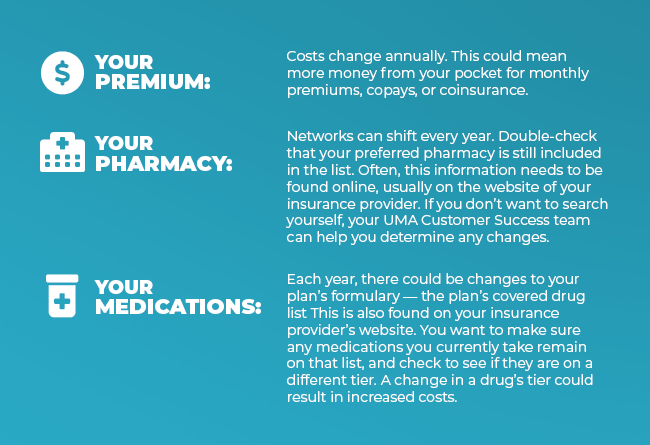
1. Changes to your Medicare Part D costs: Premiums, deductibles, and out-of-pocket maximum
Your Medicare Part D premium (monthly payment) is often adjusted annually. Your ANOC will clearly state your new monthly premium for next year.
It’s also crucial to check for changes to your plan’s annual deductible and out-of-pocket maximum. Thanks to the Inflation Reduction Act, there is no longer a coverage gap (donut hole) in your plan. Instead, you’ll have an annual out-of-pocket cap for covered prescription drugs. This cap will likely go up slightly each year, and your ANOC will reflect the changes.
If your new Part D premium, deductible, or other out-of-pocket expenses are increasing, or if these changes make your plan less affordable, you may need to compare Medicare Part D plans during Medicare’s Annual Enrollment Period (AEP).
2. Updates to your Medicare Part D prescription coverage (formulary)
Your Medicare Part D ANOC will detail any changes to your plan’s formulary, which is the official list of covered drugs. This is one of the most important sections for many Medicare beneficiaries. Look for:
- Removed medications: Are any of your essential prescription drugs no longer covered?
- New medications: If your doctor has prescribed a new medication, check to see that it will be covered under your plan for the next year.
- Tier changes: Have any of your medications moved to a different drug tier? A higher tier usually means higher copayments or coinsurance.
- Restrictions: Check for new requirements like prior authorization or step therapy (where your insurer requires you to try a lower-cost medication before it covers a more expensive drug your doctor prescribed) for medications you take.
Even if your current medications are still covered, changes to their tier or cost-sharing could significantly impact your out-of-pocket drug costs. If your key prescriptions are no longer affordable or covered, it’s a strong sign to compare Part D plans. (For more detailed information on this topic, download our e-book, The Complete Guide to Medicare Part D).
3. Changes to your Medicare Part D pharmacy network
Your ANOC will also indicate any updates to your plan’s pharmacy network. Make sure your preferred pharmacy is still in network for next year. If the pharmacy you use leaves your plan’s network or stops offering preferred cost sharing, you might pay more for your prescription drugs.
If changing pharmacies isn’t an option for you, consider exploring other Medicare Part D plans that include your preferred pharmacy in their network.
4. Changes to your Medicare Part D plan’s service area
While rare, it’s essential to confirm that your Medicare Part D plan still covers your geographic area, especially if you live in a rural region or are planning a move. Your ANOC will notify you if your plan’s service area has changed next year. If your current area is no longer included, you must enroll in a new Part D plan for the upcoming year during annual enrollment.
ANOC Part D trends in recent years
In 2025, Part D plans moved from a complicated “donut hole” structure to a simple out-of-pocket maximum for beneficiaries. This change lowered individuals’ out-of-pocket costs, particularly if they had a lot of high-cost prescriptions. Because insurance carriers are now responsible for a greater amount of drug spending, the carriers have started shifting some of those costs to consumers. Here’s what to look for in your Part D ANOC to ensure your costs don’t go up dramatically next year.
- Each year, the out-of-pocket maximum has increased slightly. This is set by Medicare, not the insurance carriers. But it’s important to track the increase since it tells you your total out-of-pocket costs.
- Plan carriers are using several levers that could increase prescription drug costs for plan beneficiaries. You should see if your premiums and formularies are changing next year. Along with ensuring your drugs are still covered under the plan, check to see if they are in the same or a higher tier next year. Their tier impacts how much you pay.
What if I need new prescriptions this year?
If you have been recently diagnosed with a new health condition or suspect your medications may be changing for another reason, your ANOC will help you understand what your costs might look like next year. If you’re worried the plan you’re on is going to be too expensive, reach out to United Medicare Advisors. These licensed agents can help you compare Part D plans to get the most out of your benefits for a price that fits your budget.
Do you need to take action? Navigating Medicare Annual Enrollment
After reviewing your Medicare Part D Annual Notice of Change in conjunction with your personal prescription needs and budget, you’ll have a clear picture of whether your current Part D plan remains the best fit for next year. Remember, even minor changes to premiums or a single medication’s tier can significantly impact your out-of-pocket costs.
The AEP, running from October 15 to December 7, is your opportunity to switch Medicare Part D plans or enroll in a new one.
Need help making sense of your ANOC or comparing Medicare Part D plans?
- Download The Complete Guide to Medicare Part D
- Contact United Medicare Advisors for unbiased, personalized assistance to help you compare Part D plans from leading carriers and find the best prescription drug coverage for your needs, at no cost to you.